From Clogs to Compliance: 5 Critical Questions to Ask Any Commercial Plumbing Contractor in Oklahoma City
Running a business in Oklahoma City means dealing with a lot of moving parts—inventory, staffing, customer service, and, yes, the inevitable facility maintenance. When a plumbing emergency strikes, you need an immediate solution, but when you’re planning for the long term, you need a partnership.
Your commercial plumbing system is the silent, beating heart of your entire operation, and choosing the wrong contractor can lead to costly downtime, structural damage, and even health code violations.
As an oklahoma city commercial plumbing contractor, we know that the systems in a high-traffic restaurant, a multi-story office building, or a busy retail center are worlds apart from residential plumbing. The sheer scale, usage, and complexity demand a specialist. Before you hire, you need to be sure the company you choose is equipped not just with tools, but with the specialized knowledge to protect your business.
We’ve compiled the five most critical questions—derived from the top concerns of OKC businesses—that you must ask any potential commercial plumbing contractor to ensure you are getting expert service that meets both your operational needs and local compliance codes.
Question 1: Do You Understand the Difference Between Commercial and Residential Plumbing?
It sounds obvious, but many smaller “plumbers” primarily handle residential issues and simply lack the capacity, equipment, and expertise for true commercial work.
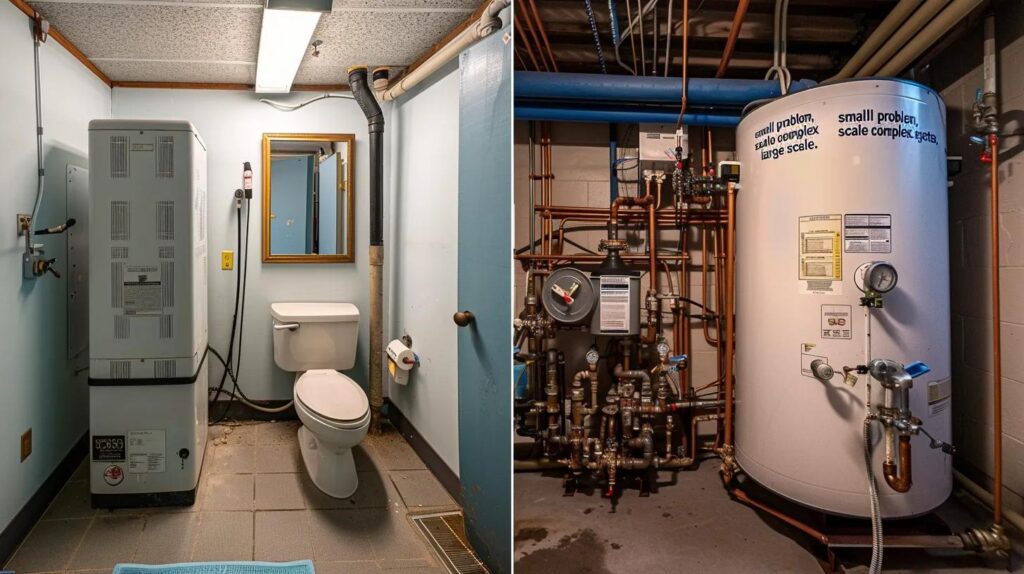
The Hidden Complexity of Commercial Systems
When you compare commercial plumbing vs. residential plumbing, you’re not just comparing two different jobs; you’re comparing two entirely different engineering disciplines.
- Usage Volume: A home’s system handles the water demands of one family. A commercial property—be it a gym, a school, or a hotel—can serve hundreds or even thousands of people daily. This relentless demand means that fixtures, pipes, and appliances must be industrial-grade and far more durable.
- System Size and Scale: Residential properties rarely exceed two or three stories. Commercial facilities can have multiple floors, which radically increases the pressure demands, the complexity of the pipe network, and the sheer volume of water flowing through the system. This requires commercial-grade solutions for both the building’s main supply line and its wastewater discharge, including sophisticated features like commercial water system installation oklahoma city.
- Code Compliance: Residential plumbing is governed by standard building codes, but commercial plumbing systems must adhere to a much more rigorous thicket of regulations. This includes specific mandates regarding water conservation, ADA compliance (for fixtures), and, crucially, health and safety standards, particularly in food service or medical facilities. Any potential contractor must have deep, up-to-date knowledge of these local and state-wide plumbing codes.
Why Specialized Equipment Matters
A residential plumber uses a snake. A professional commercial plumbing co uses industrial-grade tools. When facing a massive blockage, a residential snake simply won’t cut it. Your contractor should be equipped with tools like specialized commercial plumbing auger devices and, for the toughest jobs, state-of-the-art hydro jetting equipment.
When you ask this question, you aren’t looking for a simple “Yes.” You are looking for an in-depth explanation of how their daily work differs from a typical house call, and proof that their certifications and equipment are built for the intensity of your business needs.
Question 2: What is Your Plan for Preventing Costly Plumbing Failures?
Emergency repairs are part of the business, but a reliable contractor will always prioritize prevention. The best way to reduce the need for an emergency plumbing service near me is through robust preventative maintenance.
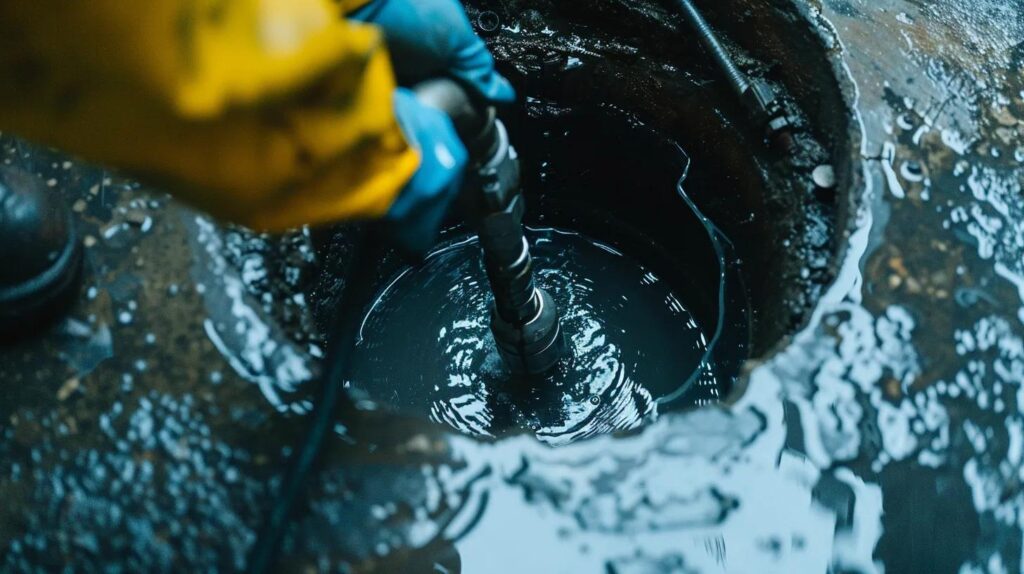
The Power of a Preventative Maintenance Checklist
A good contractor should be able to provide a comprehensive commercial plumbing maintenance checklist that goes far beyond simply clearing a drain. It is a structured process designed to catch small issues before they become catastrophic emergencies like a burst main pipe or a full sewer line backup.
Key items your contractor’s checklist should cover, and what they should report back to you on, include:
- Drain Health: Routine checks and cleaning (especially for businesses with high grease or debris output) to prevent common clogs. Regular maintenance using a commercial snake for plumbing can keep lines clear, but a more thorough solution is often necessary.
- Water Pressure Verification: Ensuring your system’s water pressure remains within the safe range (typically 40–80 psi) to prevent stress on pipes and fixtures, thereby reducing the need for premature pipe repair and replacement.
- Valve and Fixture Inspections: Testing all major shutoff and safety valves to ensure they function properly in an emergency, and checking high-traffic fixtures for leaks and signs of excessive wear.
- Corrosion and Leak Detection: Actively looking for subtle signs of rust, corrosion, or hidden water leak detection that can signal a problem in your main system.
Hydro Jetting: The Ultimate Preventative Clean
For businesses prone to slow drains or grease buildup (especially restaurants and food processing locations), your plan for drain cleaning should center on Hydro Jetting.
This is not a simple drain clearing; it is a full, non-chemical deep clean. The process is swift and minimally invasive:
- Inspection: A video camera is inserted to assess the pipes’ condition and locate any blockages.
- Pressure Setup: A highly skilled technician calibrates the water pressure—sometimes up to 4,000 psi—to match the pipe size and material.
- Cleaning: The pressurized water is blasted through the pipes, effectively scouring away years of accumulated grease, scale, and organic residue, restoring the lines to a near-new diameter.
This is a long-term strategy that reduces repeat call-outs and protects the integrity of your entire drainage system, making it an essential service in midwest commercial plumbing.
Question 3: How Do You Handle Backflow and Water Quality Compliance?
Protecting the community’s water supply is a legal obligation for every business owner in Oklahoma. The contamination of the clean water supply via a commercial system—known as backflow—is a serious issue that carries heavy fines and significant public health risks.
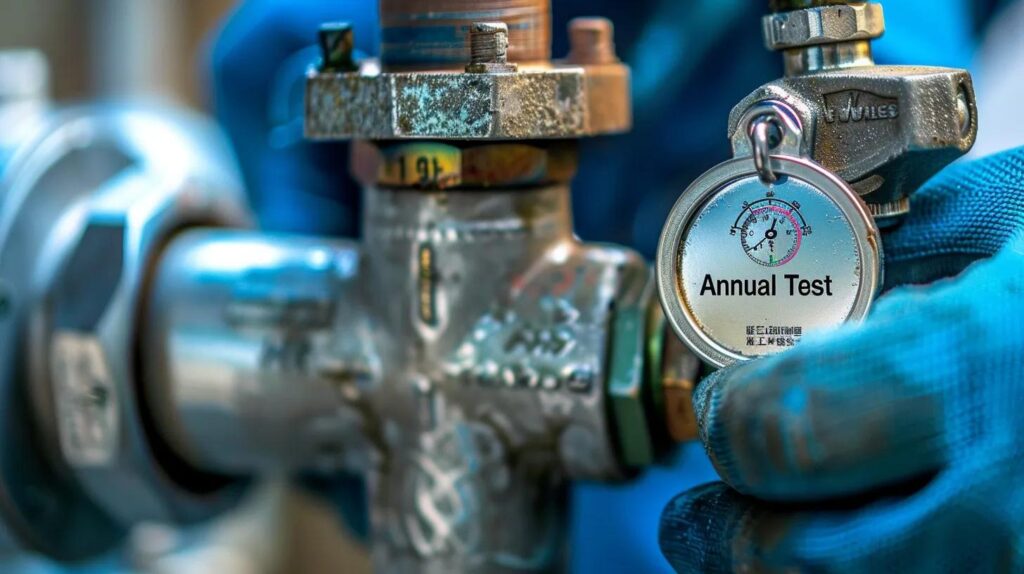
Understanding Backflow Prevention Devices
Any cross-connection—where your potable (drinkable) water line connects to a non-potable source like a fire suppression system, irrigation system, or industrial equipment—must have a backflow prevention device installed.
These critical safety mechanisms stop contaminated water (like fertilizer, chemicals, or dirty process water) from being siphoned or pushed back into the municipal supply.
What to look for in a contractor regarding backflow:
- Certified Testers: Backflow prevention devices (such as Reduced Pressure Zone or Double-Check Valves) are complex and legally require annual testing by a plumber who is specifically licensed and certified to do so. Your contractor must demonstrate this certification and ensure compliance with the City of Oklahoma’s water quality standards.
- Installation Expertise: They should have experience installing various devices, including specialized commercial units like commercial reverse osmosis water systems, which are often crucial for businesses like hospitals or food processors that require ultrapure water.
When you ask your commercial plumbers oklahoma city about backflow, they should immediately mention compliance, annual testing, and the types of devices best suited for your business’s specific hazard level.
Question 4: What Are Your Credentials, Insurance, and Availability?
In the commercial world, an insurance certificate is just as important as a wrench. Your contractor must be financially and legally secure to protect you from liability and unexpected costs.
Non-Negotiable Credentials
A legitimate and trustworthy commercial plumbing company must provide proof of the following:
- Licensing: They must hold a current, valid master or journeyman plumbing license issued by the State of Oklahoma, with a specific endorsement for commercial work.
- Bonding: This provides you with financial protection in case the work is not completed according to the agreement.
- Insurance: They must carry comprehensive liability insurance. If an accident occurs on your property that causes damage or injury, this insurance is what shields your business from being financially responsible. Never hire an uninsured contractor.
The Emergency Response Promise
Unlike a residential leak, a commercial failure (a massive sewer backup, a non-functional water heater, or a burst pipe) can instantly shut down your operations, leading to thousands in lost revenue.
Your plumbing partner needs to be more than just a 9-to-5 operation. They should offer:
- 24/7/365 Emergency Service: When a crisis happens at 3 AM on a holiday, you need a contractor who can respond immediately. Inquiring about their average emergency response time for businesses within the OKC and 50-mile radius (Bethany, Yukon, Moore) is a critical step.
- Flexible Scheduling: Most major maintenance and large-scale pipe repair replacement projects should be planned during non-business hours (nights or weekends) to prevent disruption to your staff and customers. Confirm their willingness and capability to operate outside of standard working hours.
Question 5: Can You Provide a Proven Track Record of Commercial Success?
Experience is the difference between a quick fix and a lasting solution. An experienced contractor has seen it all and knows how to approach your problem with efficiency and foresight.
Asking for Business-Specific References
Don’t just ask for references; ask for references from businesses like yours.
- A contractor who specializes in industrial facilities may not be the best fit for a high-end retail boutique, and vice-versa.
- Ask for details on similar projects: “Can you share a recent commercial plumbing service near me project involving a multi-story grease trap installation?”
- Check their online reputation. Look at reviews on Google and trade-specific sites to see what other OKC business owners are saying about their professionalism, honesty, and whether their work was completed on time and on budget.
The goal is to hire an established plumbing service company that views your business’s long-term operational success as their own. They should offer upfront, transparent quotes, stand behind their work with a solid warranty on parts and labor, and possess the expertise you can truly trust.
FAQs About Commercial Plumbing Maintenance and Services
FAQs About the 'Preventative Maintenance' Topic
Q: How often should a commercial property have a full plumbing inspection? A: We strongly recommend a full commercial plumbing inspection at least once per year. For high-usage facilities like restaurants or industrial plants, we recommend half-yearly checks. These routine inspections help identify small issues like minor leaks, valve failures, and early signs of pipe corrosion before they escalate into major, costly disasters.
Q: Is chemical drain cleaner safe to use in commercial drains? A: No. We strongly advise against using off-the-shelf chemical drain cleaners in any commercial setting. These harsh chemicals can damage pipes and fixtures, pose a health hazard to your employees, and are often ineffective against the tough clogs (like grease and scale) common in commercial lines. Professional methods like snaking or hydro jetting are the safer, more effective solutions.
Q: What is the most common cause of low water pressure in a commercial building? A: Low water pressure can be caused by several factors, including mineral buildup (scale) inside the pipes, a failing pressure regulator, or an undetected leak. In older buildings, corrosion and scaling can reduce the effective pipe diameter, drastically cutting water flow. A professional inspection with a pressure gauge can quickly diagnose the root cause.
FAQs About Commercial Waterworks
Q: What types of commercial properties does Commercial Waterworks service in Oklahoma City? A: Our team of licensed, veteran plumbers has the specialized knowledge to service a wide range of facilities, including high-rise offices, retail centers, restaurants (grease trap maintenance), hospitality (hotels/motels), assisted living facilities, and educational campuses. We handle everything from basic plumbing service and leak detection to full-scale commercial water system installation and complex sewer line repairs.
Q: Does Commercial Waterworks offer 24/7 emergency service? A: Yes. We understand that a plumbing crisis doesn’t wait for business hours. We offer around-the-clock, 24/7 emergency service plumbing in Oklahoma City and the surrounding areas. Our promise is a lightning-fast, same-day response time to minimize downtime and business disruption. Just search for plumbing emergency service near me and call us immediately.
Q: Is Commercial Waterworks fully licensed and insured? A: Absolutely. Commercial Waterworks is a division of ACME Construction, and we are fully licensed, bonded, and insured as a commercial plumbing contractor in the State of Oklahoma. We adhere to the highest standards of safety and professionalism, guaranteeing that our work meets all local codes and protecting your business from liability.
About Commercial Waterworks
Commercial Waterworks is a recognized leader in midwest commercial plumbing services, proudly operating as a dedicated division of ACME Construction. Our company was founded on the principle that commercial properties require a level of expertise, equipment, and responsiveness that a typical residential plumber cannot provide.
Expertise and Experience: Our team is composed of seasoned, certified Master and Journeyman plumbers. We don’t hire “handymen”; we employ licensed veterans who specialize exclusively in the intricate systems of high-volume commercial facilities—from complex commercial plumbing repairs and system diagnostics to large-scale commercial reverse osmosis systems installation.
Authority: We are fully compliant with all state and local plumbing codes (including the Oklahoma Uniform Building Code) and hold the necessary licenses and credentials to perform sensitive tasks like backflow device testing and gas line services. Our commitment to code adherence ensures your business remains compliant and safe.
Trust: We understand that trust is earned. We commit to upfront, transparent pricing, free quotes, and a work guarantee. When you call Commercial Waterworks for commercial plumbing service, you can rest assured that you are dealing with a professional, ethical, and highly-capable partner dedicated to your business’s uninterrupted operation.
Final Thoughts
Choosing a commercial plumbing contractor is one of the most consequential decisions you make for your business’s infrastructure. The right partner provides more than just a repair; they provide the peace of mind that comes with minimal downtime, reduced maintenance costs, and total compliance with health and safety regulations.
By asking the 5 critical questions outlined above—from verifying their specialized experience to confirming their compliance knowledge—you can confidently select a partner who will protect your investment. Commercial Waterworks is here to be that partner. We are the trusted, fully-insured commercial plumbing contractors oklahoma city businesses rely on for lightning-fast emergency response and robust preventative maintenance.
Don’t wait for a crisis to find out your plumber is out of their depth. Make the proactive choice today and ensure your commercial plumbing company is truly equipped for the demands of your business. Call us now for a free quote or to schedule your annual system inspection.